

A centrifugal pump works by converting rotational energy into fluid movement. As the impeller spins, it creates centrifugal force that pushes liquid outward from the centre toward the pump outlet, increasing both velocity and pressure. This makes centrifugal pumps ideal for moving water, chemicals, and low-viscosity fluids across a wide range of industries.
Key Takeaways:
- Centrifugal pumps use an impeller to transfer energy and move fluid efficiently through a piping system.
- They are widely used in industrial, agricultural, and domestic applications due to their simple design and low maintenance.
- Different types of centrifugal pumps—like multistage, slurry, magnetic drive, and canned motor pumps—are available for various fluid types and system needs.
In this blog, we will delve into what a centrifugal pump is, how it works and cover a few different types of centrifugal pumps.
What is a Centrifugal Pump?
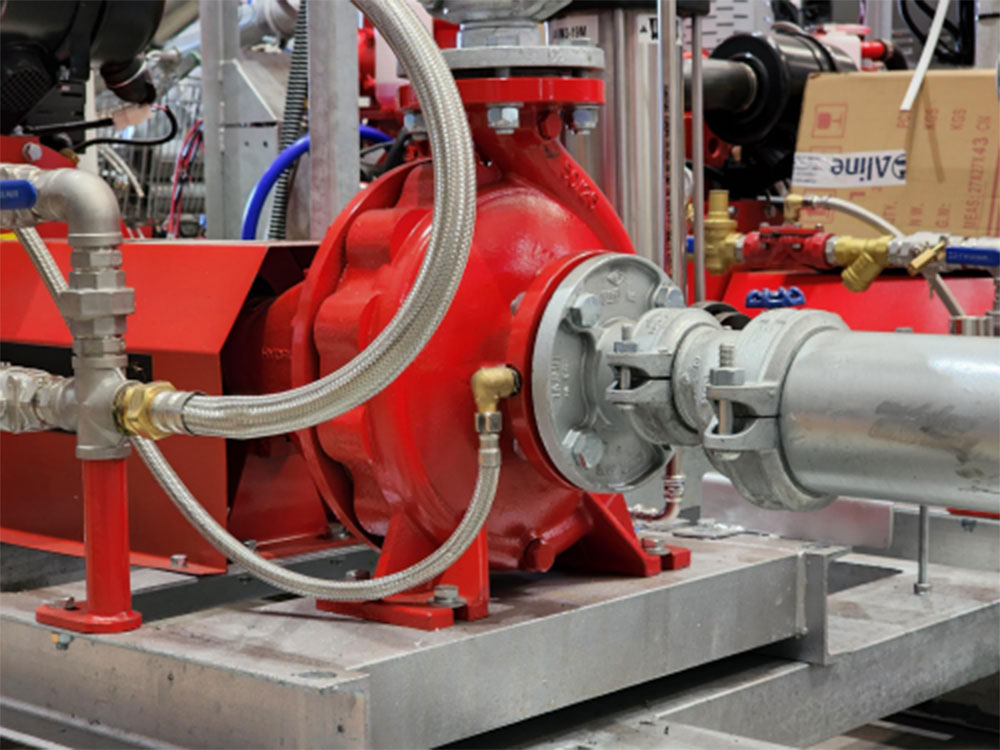
This mechanical device is designed to move any fluid with the transfer of rotational energy through one or more driven rotors, called impellers.
This rotational energy allows fluid to enter the rotating impeller on its axis. Cast out by centrifugal force, this action of the impellers increases the velocity of the fluid and directs the pressure towards the outlet.
Consisting of a series of curved vanes, the key component of a centrifugal pump is the impeller. There are three types of impellers: enclosed, open or semi-open.
These innovative pumps offer low cost and simple solutions for high-capacity pumping applications with low velocity fluids including water, chemicals, light oils and solvents.
What Are The Types of Centrifugal Pumps?
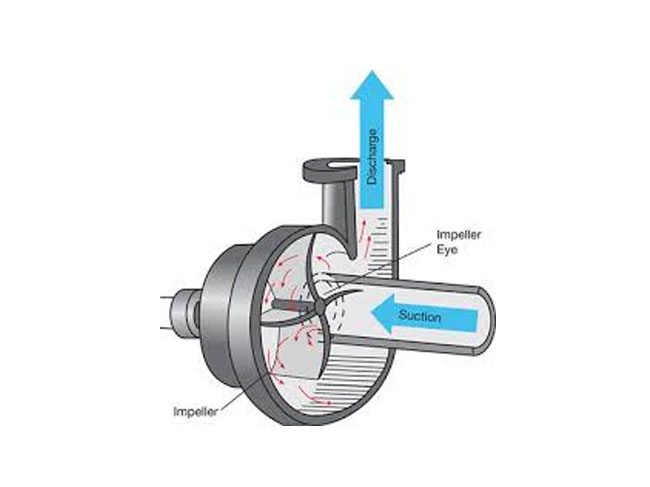
Centrifugal pumps come in two basic designs of casing: diffuser and volute. The impeller is offset in a volute casing which creates a curved funnel to increase the cross-sectional area towards the outlet – causing fluid pressure to increase.
A diffuser casing is similar, but the fluid is expelled between a set of stationary vanes causing the fluid pressure to increase. This design is more efficient as it can be tailored to specific needs. A volute casing is suitable for high viscosity fluids or entrained solid applications.
There is an array of centrifugal pumps on the market that are suitable to different applications and industries. A few of them include:
- Frequently used for draining mines, construction sites and pits, trash pumps are able to handle highly abrasive slurries.
- With an inline compact design, a circulator pump is used for heating, air conditioning and ventilation.
- Chopper or grinder pumps are used in industrial, chemical and food processing for wastewater or sewage. These feature an impeller with grinding teeth to break up the solids.
- Used for high pressure applications a multistage pump uses multiple impellers to increase discharge pressures.
- A canned motor pump is used in hydrocarbons or chemicals where any leakage is not permitted. It features a sealless design with an impeller directly attached to the motor rotor and wetted parts contained in the can.
- Magnetic drive pumps are also used with chemicals and hydrocarbons and are complete with a sealless design that has an impeller driven by close coupled magnets.
- A slurry pump is often used in mining, industrial slurries and mineral processing. This pump is designed to withstand highly abrasive slurries.
- A cryogenic pump is made to tolerate low temperatures. Made from special construction materials, this pump is applied to liquid natural gas and coolants.
Aline Pumps
For all your pump needs, Aline Pumps has you covered. Contact us today to see how we can assist you with centrifugal pumps.


